e concept of input VAT and output VAT in the UAE plays a vital role in understanding how businesses manage their tax obligations under the Value Added Tax (VAT) framework. Introduced in 2018, VAT in the UAE has become an essential component of the country’s taxation system, helping ensure transparency, fair trade, and compliance across all sectors. For entrepreneurs, investors, and financial managers, grasping the difference between input and output VAT is critical to maintaining compliance with UAE tax laws and optimizing financial operations.
AlphabuDhabi provides detailed business setup and tax assistance in the UAE, including guidance on input VAT and output VAT in UAE calculations, returns, and registration processes. This article breaks down the main differences, rules, and mechanisms behind input and output VAT, and how businesses can handle them effectively.
What Is Input VAT and Output VAT?
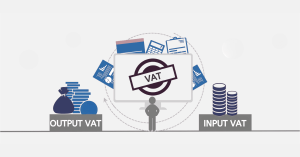
To understand what input VAT and output VAT are, it’s essential to know that both represent two sides of the same VAT system. Output VAT is the tax charged by businesses when selling goods or services to customers, while input VAT is the tax paid by businesses on their purchases and expenses.
When a company sells goods or services, it collects output VAT on behalf of the Federal Tax Authority (FTA). When the same company purchases goods and services, it pays input VAT to its suppliers. At the end of each tax period, the business subtracts the total input VAT from the total output VAT to determine the amount payable or refundable to the FTA.
If output VAT exceeds input VAT, the company owes the difference to the tax authority. However, if input VAT is higher, the business can claim a refund or carry forward the balance. This mechanism ensures a fair and transparent flow of tax payments across all stages of production and distribution.
Input and Output VAT in the UAE
Understanding input and output VAT in the UAE is crucial for businesses registered for VAT. The UAE imposes a standard VAT rate of 5% on most taxable goods and services. Input VAT is typically recoverable, provided the purchases are used for taxable business activities. Output VAT, on the other hand, is collected from customers when the business makes a sale.
Businesses must record both input and output VAT accurately to avoid penalties and ensure compliance. AlphabuDhabi assists companies with VAT record-keeping, ensuring that invoices, receipts, and documentation comply with UAE tax regulations.
Input VAT Rules
The input VAT rules in the UAE are designed to allow businesses to reclaim VAT paid on eligible purchases. According to the UAE VAT law, input VAT can be reclaimed when the goods or services acquired are used for taxable business activities. However, there are some exceptions:
- Input VAT cannot be recovered for personal or non-business expenses.
- Input VAT on entertainment expenses, motor vehicles for personal use, and employee-related costs (not directly related to business activities) is not recoverable.
- Businesses must have valid tax invoices with all mandatory details to claim input VAT.
To manage this effectively, companies must maintain accurate accounting records. AlphabuDhabi helps clients implement efficient VAT management systems to ensure smooth recovery of input VAT in compliance with the FTA guidelines.
Output VAT Rules
Output VAT rules in the UAE specify that all VAT-registered businesses must charge VAT on taxable supplies of goods and services. The tax must be calculated at the prevailing rate (5%) and clearly stated on each invoice issued to the customer.
Output VAT applies not only to domestic sales but also to imports of goods and services. In such cases, the importer is responsible for accounting for the VAT under the reverse charge mechanism. Businesses must submit tax returns to the FTA, showing total output VAT collected and input VAT paid during the period.
AlphabuDhabi advises companies on output VAT compliance, helping them apply correct tax rates, manage invoices, and submit timely VAT returns to avoid penalties or delays.
How to Calculate Input and Output VAT in the UAE
The calculation of input VAT and output VAT in the UAE is straightforward but must be done carefully. Here’s a simplified example:
- A company sells products worth AED 100,000 and charges a 5% VAT, resulting in AED 5,000 of output VAT.
- The same company purchases raw materials worth AED 50,000 and pays AED 2,500 in input VAT.
At the end of the tax period:
Output VAT (AED 5,000) – Input VAT (AED 2,500) = VAT Payable (AED 2,500).
If the input VAT were higher than the output VAT, the business could claim a refund from the FTA or carry forward the balance to the next tax period.
AlphabuDhabi offers professional accounting support to simplify VAT reconciliation and ensure accurate reporting for businesses of all sizes.
Importance of Proper VAT Documentation
Proper documentation is key to managing input VAT and output VAT in the UAE. Businesses must maintain tax invoices, receipts, import/export records, and credit notes for at least five years as per UAE tax regulations.
Each VAT invoice must include:
- The supplier’s name, address, and TRN (Tax Registration Number).
- The recipient’s details.
- Date of issue and description of goods or services.
- Total amount before and after VAT.
- The applied VAT rate and amount.
Without proper documentation, businesses risk losing the right to reclaim input VAT or face penalties during audits. AlphabuDhabi ensures clients stay compliant by setting up organized VAT systems and digital accounting tools.
Common Challenges in Managing Input and Output VAT
While the system of input VAT and output VAT in the UAE seems simple, many businesses face practical difficulties. These include:
- Misclassifying taxable and exempt supplies.
- Failing to record VAT on imported goods and services.
- Delays in VAT return filing.
- Errors in claiming input VAT on non-eligible expenses.
To avoid such issues, it’s essential to work with professionals who understand UAE tax laws thoroughly. AlphabuDhabi’s experts provide tailored VAT consulting services to ensure seamless compliance and accurate VAT management.
Practical Example of VAT Transactions
Consider a construction company registered for VAT in the UAE:
- It purchases building materials worth AED 200,000 and pays AED 10,000 as input VAT.
- It provides construction services worth AED 400,000 and charges AED 20,000 as output VAT.
When submitting its VAT return, the company will report AED 20,000 as output VAT and AED 10,000 as input VAT. The difference, AED 10,000, will be payable to the FTA.
Such examples show how input VAT and output VAT in the UAE operate in daily business transactions and how accurate calculations are vital to avoid overpaying or underpaying VAT.
VAT Refunds and Adjustments
If a company’s input VAT exceeds its output VAT, it may be eligible for a refund. The FTA allows registered businesses to apply for VAT refunds under specific conditions, such as zero-rated supplies or export-related activities.
It’s important to file refund claims correctly, supported by all necessary documentation. AlphabuDhabi helps businesses prepare and submit refund applications efficiently, ensuring quick processing and compliance with FTA requirements.
The Role of AlphabuDhabi in VAT Compliance
AlphabuDhabi offers comprehensive support for all VAT-related activities, including:
- VAT registration and deregistration.
- Input and output VAT calculation and reporting.
- Preparation and filing of VAT returns.
- VAT audits and refund management.
- Accounting system setup and compliance reviews.
By partnering with AlphabuDhabi, businesses can focus on growth while ensuring their VAT obligations are met accurately and on time.
Our Services at Alpha Abu Dhabi
At AlphaBudhabi, we are committed to providing a wide range of services that meet the needs of individuals, entrepreneurs, startups, and large companies. Our most prominent services include:
Company Formation
- Establishing companies within Abu Dhabi and in free zones
- Preparing contracts and commercial licenses
- Providing legal and administrative consultations
Issuing visas and residency permits
- Residence visas for investors, families, and employees
- Issuing and renewing work permits
- Procedures for tourist visas and long-term residency permits
Labour Office Services
- Settling Labour Office Violations
- Updating employment contracts and amending labour status
- Issuing new work permits and renewing existing ones
Immigration and Passport Services
- Assistance in submitting citizenship or golden residency applications
- Immigration and investment consultations in the UAE and abroad
- Issuing and renewing passports for some nationalities
Conclusion
Understanding input VAT and output VAT in the UAE is essential for every business operating in the region. Proper management of VAT ensures compliance with the law, prevents penalties, and supports efficient financial operations. Knowing what input VAT and output VAT are, and following the correct input VAT rules and output VAT rules, can help businesses maintain transparency and maximize their financial performance.
AlphabuDhabi is your trusted partner in VAT compliance, offering expert consultation and practical assistance for VAT registration, filing, and audits across the UAE.
Communication Methods
For expert assistance and professional VAT services, contact AlphabuDhabi:
- Email: info@alphabudhabi.com
- Website: www.alphabudhabi.com
- Phone: +971561691648
FAQs
Input VAT is the tax paid on purchases, while output VAT is the tax collected from customers on sales.
Yes, if input VAT exceeds output VAT, a business can apply for a refund through the FTA portal.
No, only purchases used for taxable business purposes qualify for recovery.
VAT returns are typically filed quarterly, though some businesses may file monthly.
Yes, AlphabuDhabi offers full VAT compliance and audit support for UAE businesses. What is the difference between input VAT and output VAT in the UAE?
Can businesses claim refunds for input VAT in the UAE?
Are all purchases eligible for input VAT recovery?
How often must VAT returns be filed in the UAE?
Can AlphabuDhabi help with VAT audits and reviews?