The UAE Population in 2026 continues to attract global attention as the country strengthens its position as a hub for tourism, trade, innovation, and investment. With a rapidly evolving economy, ambitious development vision, and one of the most diverse societies in the world, understanding the United Arab Emirates population 2026 is no longer just a matter of curiosity—it is essential for anyone considering living, working, or investing in the country.
This comprehensive guide explores the area and population of the UAE, the size of the indigenous Emirati community, the population of the UAE excluding foreigners, the detailed UAE population by nationality 2026, and the projected Abu Dhabi population 2026, along with key features of UAE demographics such as age, gender, urbanisation, and social trends.
Overview of the UAE Population 2026
By 2026, the population of the UAE 2026 is expected to surpass 10 million residents. This impressive figure is the result of steady growth over the past two decades, driven mainly by the arrival of expatriate workers, professionals, entrepreneurs, and their families who are drawn to the UAE’s strong economy and high quality of life.
Several factors support this ongoing population growth:
- Economic dynamism: The UAE has diversified far beyond oil into logistics, tourism, finance, real estate, technology, culture, and renewable energy, creating strong demand for global talent.
- Strategic location: Positioned between Europe, Asia, and Africa, the UAE serves as a global gateway for trade and travel.
- World-class infrastructure: Modern airports, ports, highways, hospitals, schools, and digital services make the country highly attractive to both businesses and residents.
- Forward-looking policies: Flexible residency and visa reforms, such as golden visas and long-term residency options, encourage people to build long-term lives and careers in the country.
As a result, the United Arab Emirates population 2026 is not only larger than ever, but also more diverse, specialized, and globally connected.
How Many Are the Indigenous People of the UAE?
A key question many people ask is: How many indigenous people of the UAE? In other words, what is the population of the UAE is citizen?
While expatriates make up the majority of residents, Emirati citizens are estimated at around 1.2 million people in 2026. This means the population of the UAE, excluding foreigners—that is, the indigenous Emirati community—accounts for roughly 11–12% of the total UAE population in 2026.
Despite being a numerical minority, Emirati citizens hold a central role in the country’s political leadership, cultural identity, and long-term vision. Government strategies, national initiatives, and social support systems are carefully designed to preserve Emirati heritage while keeping pace with international growth.
The Population of the UAE Excluding Foreigners
To answer the specific search intent behind “The population of the UAE excluding foreigners”, it is important to focus entirely on Emirati nationals. When we isolate only citizens from the total UAE population in 2026, we see:
- Citizens (Emiratis): Around 1.2 million
- Total residents: Over 10 million
This highlights how heavily the UAE depends on expatriate workers and investors, while at the same time implementing robust programs to empower the local population through education, employment, housing, healthcare, and entrepreneurship support.
The population of the UAE is a citizen segment that enjoys particular benefits, such as:
- Access to comprehensive social welfare systems
- Free or subsidised education and healthcare
- Housing programmes and land grants in some emirates
- Priority for certain government and strategic sector jobs
These policies ensure that the Emirati community remains at the heart of national development, even as the wider United Arab Emirates population in 2026 becomes more global and diversified.
The Characteristics of the UAE and Its Population
When people search for “The characteristics of the UAE”, they are often interested in understanding both the country and its people. From a demographic perspective, several characteristics define the UAE demographics in 2026:
Multicultural society
The UAE is home to over 200 nationalities, making it one of the most diverse societies in the world. This diversity shapes everything from cuisine and fashion to business culture and education.
Urban and modern lifestyle
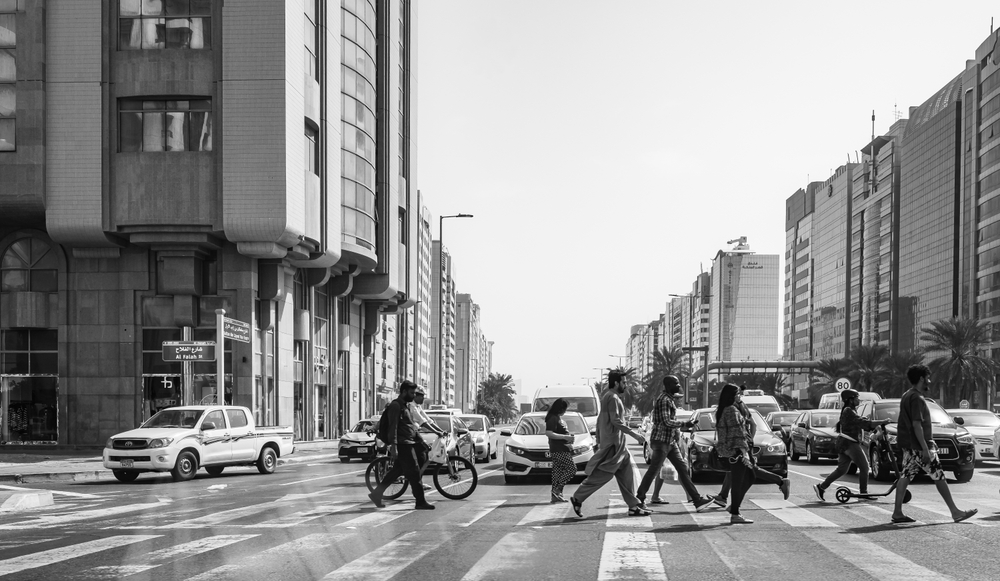
The overwhelming majority of the United Arab Emirates population in 2026 lives in cities with advanced infrastructure, such as Dubai, Abu Dhabi, and Sharjah. Urban living, high-rise communities, and smart city solutions are integral to daily life.
Young and economically active population
A large proportion of residents are in the 20–49 age group, forming a strong, productive workforce that fuels economic development and innovation.
High literacy and education levels
Both Emiratis and expatriates typically have strong educational backgrounds. International schools, universities, and training centres support continuous learning.
Ambition and future orientation
National visions such as UAE Vision 2031 and emirate-level strategies encourage innovation, sustainability, and digital transformation, shaping the aspirations of the population.
Altogether, the characteristics of the UAE reflect a youthful, dynamic, and globally connected society moving confidently towards the future.
Area and Population of the UAE
Another common query is: What is the area and population of the UAE? The country covers about 83,600 square kilometres, spread across seven emirates:
- Abu Dhabi
- Dubai
- Sharjah
- Ajman
- Ras Al Khaimah
- Fujairah
- Umm Al Quwain
In terms of population, the UAE Population in 2026 is highly concentrated in a few major metropolitan areas, mostly along the coast. While the total population exceeds 10 million, the density and distribution vary by emirate, as we will see in more detail when exploring the Abu Dhabi population 2026 and other emirates.
This relatively small physical area, combined with a rapidly growing population, places pressure on land, infrastructure, and natural resources, which is why the UAE invests heavily in smart cities, efficient public transport, renewable energy, water desalination, and green building standards.
UAE Demographics 2026: Age, Gender and Urbanisation
To fully understand UAE demographics, it is helpful to look at several structural aspects: age distribution, gender balance, and degree of urbanisation.
Age Structure
Working-age adults dominate the United Arab Emirates population in 2026:
- A relatively small proportion of children and elderly residents
- A very large share of residents aged roughly 20–49 years
This age structure supports strong labour productivity but also means that demand for jobs, housing, and lifestyle services remains high, especially in urban areas.
Gender Imbalance
Like many countries that rely heavily on foreign labour, the UAE has a noticeable gender imbalance. Men outnumber women, largely because many expatriate workers arrive alone to work in construction, industry, and logistics. Over time, however, government policies encouraging family residency are slowly improving the gender balance.
Urbanisation
UAE demographics are overwhelmingly urban. A major share of the UAE population in 2026 lives in large cities or urbanised coastal corridors. This has several implications:
- High demand for apartments, villas, and community housing
- Need for integrated public transport, including metros, buses, and trams.
- Growth of shopping malls, entertainment districts, and business hubs
- Rising importance of smart technologies in traffic management, public services, and security
UAE Population by Nationality 2026
One of the most distinctive aspects of UAE demographics is the breakdown of the UAE population by nationality in 2026. Unlike most countries where citizens form the clear majority, the UAE has a unique structure in which expatriates dominate the population.
The Population of the UAE by Nationality
A simplified estimate of the UAE population by nationality 2026 includes:
- Indian nationals: around 2.6 million
- Pakistani nationals: around 1.2 million
- Bangladeshi nationals: about 700,000
- Filipino nationals: around 650,000
- Egyptian nationals: close to 400,000
- Emirati citizens: about 1.2 million
- Other nationalities combined: several million residents from Arab countries, other Asian nations, Europe, Africa, and the Americas
This distribution answers the repeated question, “The population of the UAE by nationality”. It highlights how expatriates contribute across all sectors—construction, healthcare, education, technology, finance, hospitality, logistics, manufacturing, and more.
The presence of such a wide range of nationalities also reinforces the country’s image as a global crossroads and a melting pot of cultures.
Abu Dhabi Population 2026 and Distribution by Emirate
Abu Dhabi, the capital and largest emirate in terms of land area, is central to understanding the population of the UAE 2026.
Abu Dhabi Population 2026
The Abu Dhabi population in 2026 is expected to exceed 3.2 million residents. These residents live across:
- Abu Dhabi City: The political and administrative heart of the UAE
- Al Ain: A historically important inland city with a rich cultural heritage
- Al Dhafra Region: A vast area including industrial, desert, and coastal zones
Abu Dhabi hosts a mix of Emirati citizens, long-term expatriate families, and temporary workers linked to industry, oil and gas, aviation, finance, education, and government sectors.
Population Distribution Across the Emirates
While Abu Dhabi is the largest emirate by area, Dubai typically has a slightly larger population due to its role as a global tourism and business hub. Sharjah has also grown rapidly, particularly as a residential choice for families and commuters working in neighbouring emirates.
Together, these three emirates—Abu Dhabi, Dubai, and Sharjah—host the majority of the United Arab Emirates population in 2026, while the northern emirates of Ajman, Ras Al Khaimah, Fujairah, and Umm Al Quwain contribute smaller but still important shares.
Living in the UAE in 2026
The everyday experience of residents is an important part of the UAE’s demographics. As the UAE Population in 2026 expands, life in the country is becoming:
- More digital: Government services, payments, healthcare bookings, and even education are increasingly available through apps and online platforms.
- More connected: Integrated roads, public transport, and air links connect cities within the UAE and across the region.
- More sustainable: Green building, recycling initiatives, and renewable energy projects help manage the environmental impact of a growing United Arab Emirates population by 2026.
- More inclusive: Many policies aim to improve the quality of life for people of determination (persons with disabilities), expand women’s participation in the workforce, and support small and medium-sized enterprises.
For expatriates, common questions include “How many are the indigenous people of the UAE?” or “What is the population of the UAE excluding foreigners?” These questions reflect a desire to understand the balance between local culture and global influence, especially when considering long-term relocation, investment, or family migration.
Benefits of the Growing UAE Population in 2026
The increase in the UAE population by 2026 brings many advantages:
- Economic growth
- A larger population means greater demand for housing, goods, services, transport, and entertainment. This stimulates new business opportunities and investments across all emirates.
- Stronger labour force
- The country benefits from a wide pool of skills—from engineers and healthcare workers to teachers, entrepreneurs, and digital specialists.
- Innovation and creativity
- Diversity in the UAE population by nationality 2026 encourages knowledge exchange, entrepreneurship, and creative collaboration across cultures and industries.
- Cultural richness
- Festivals, food, languages, art, and fashion from around the world coexist, making the UAE an attractive destination for global citizens.
Challenges of a Growing Population
Rapid growth also presents challenges that the government and society must continuously manage:
- Infrastructure pressure: Ensuring that roads, hospitals, schools, utilities, and public services can keep up with the growing United Arab Emirates population by 2026.
- Housing demand: Balancing affordable housing with rising land values and construction costs.
- Environmental sustainability: Managing water use, waste, air quality, and energy consumption in a hot, arid climate.
- Social integration: Fostering understanding and respect between diverse communities, while safeguarding Emirati cultural identity and traditions.
Through long-term strategies, smart city planning, and environmental policies, the UAE government works to turn these challenges into opportunities for sustainable development.
What the UAE Population in 2026 Means for Investors, Companies, and Residents
For organisations and individuals, understanding the UAE demographics and the detailed UAE population by nationality 2026 is essential.
- For investors and entrepreneurs:
- A growing, diverse population means a larger consumer base, demand for new products and services, and continuous opportunities in sectors like real estate, retail, healthcare, education, and entertainment.
- For companies and employers:
- The demographic structure offers access to a broad talent pool. Firms can recruit locally or internationally to find the right skills and cultural fit.
- For residents and new arrivals:
- Knowing the area and population of the UAE, the proportion of citizens versus expatriates, and the expected Abu Dhabi population in 2026 helps in planning housing, schooling, career paths, and family life.
Alpha Abu Dhabi Services: Supporting You in a Growing Market
At Alpha Abu Dhabi, we understand that navigating the UAE Population in 2026 landscape can be complex—especially for new investors, entrepreneurs, and professionals. That is why we offer a comprehensive suite of services tailored to the needs of individuals, startups, and established companies.
Company Formation and Business Setup
- Establishing companies in Abu Dhabi and free zones
- Preparing contracts and commercial licences
- Providing legal and administrative consultancy to ensure compliance with local regulations
Visa, Residency, and Immigration Solutions
- Handling investor, family, and employee residency visas
- Renewing work permits and managing visa status updates
- Guiding clients through long-term residency options, such as golden residency programmes
Labour and Employment Office Services
- Resolving labour office violations
- Updating employment contracts and labour status
- Issuing and renewing work permits for employees
Passport and Identity Services
- Assistance with certain passport-related services for eligible nationalities
- Support with immigration, relocation, and investment consultation within the UAE
As the United Arab Emirates population 2026 grows and diversifies, our role is to simplify your journey—whether you are opening a company, expanding operations, or relocating with your family.
Contact AlphabuDhabi
- Phone: +971561691648
- Email: info@alphabudhabi.ae
- Website: www.alphabudhabi.ae
Conclusion
The UAE Population in 2026 offers a clear picture of a nation in motion: diverse, ambitious, and future-oriented. With over 10 million residents, a strong expatriate majority, and a proud Emirati citizen core of around 1.2 million people, the population of the UAE 2026 combines global diversity with deep local identity.
Understanding how many are the indigenous people of the UAE, the population of the UAE excluding foreigners, the population of the UAE by nationality, and the key characteristics of the UAE allows investors, residents, and policy-makers to make informed decisions. At the same time, insights into the Abu Dhabi population 2026, the area and population of the UAE, and broader UAE demographics help explain why the country remains one of the most attractive destinations in the world.
As the UAE population by nationality 2026 continues to evolve, the United Arab Emirates will remain a unique model of multicultural coexistence and forward-looking development—offering opportunities for millions who call it home.
FAQs
The indigenous population—Emirati citizens—is estimated at around 1.2 million people, representing roughly 11–12% of the total UAE population in 2026.
When you exclude expatriates and focus solely on citizens, the population of the UAE is the citizen group stands at about 1.2 million Emiratis.
The UAE population by nationality 2026 is dominated by expatriates, with large communities from India, Pakistan, Bangladesh, the Philippines, and Egypt, alongside the Emirati citizen population and many other nationalities.
Key characteristics of the UAE population include cultural diversity, a young and economically active workforce, high urbanisation, strong education levels, and a future-oriented mindset.
The UAE covers about 83,600 square kilometres and hosts more than 10 million residents as part of the United Arab Emirates population 2026.
The Abu Dhabi population in 2026 is expected to exceed 3.2 million residents, spread across Abu Dhabi City, Al Ain, and the Al Dhafra region. How many are the indigenous people of the UAE?
What is the population of the UAE excluding foreigners?
How is the population of the UAE by nationality distributed?
What are the main characteristics of the UAE population?
What is the area and population of the UAE?
What is the Abu Dhabi population in 2026?